Abstract
We examine how private equity (PE) firms exploit divergences between legal and economic measures of control to avoid triggering antitrust scrutiny. Under the Hart-Scott-Rodino (HSR) Act, parties intending to merge must notify federal authorities and wait for clearance, but exemptions based on transaction size and the proportion of control conferred allow many deals to escape detection. When PE firms acquire competitors within the same industry, they can structure transactions through intermediate special-purpose vehicles that keep formally separate operating units below reporting thresholds while the sponsor exercises substantial economic control over pricing and strategy.
Our analysis shows that ownership-based control measures under the HSR Act—which focus on voting rights, formal ownership structures, and transaction size—systematically underestimate the economic control that PE firms exercise over portfolio companies. This measurement divergence creates an antitrust loophole: PE firms can exercise coordinated managerial control across portfolio companies while technically maintaining separate entities that escape premerger notification. We support the argument with merger and filing data.
Key Findings
Control Measurement Gap
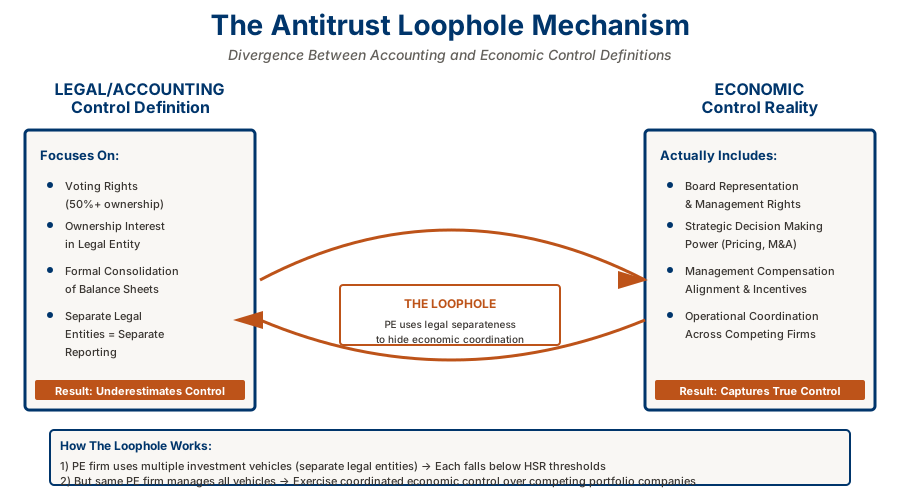
Legal control measures—voting rights and formal ownership stakes—diverge substantially from economic control when PE firms exercise influence over portfolio company operations through board seats, management rights, and informal channels.
PE Operational Control
PE firms actively exercise operational control over portfolio companies through board representation, management compensation, and strategic oversight—control not captured by the HSR Act's ownership-based tests.
Regulatory Implications
Current antitrust frameworks rely on ownership-based control definitions under the HSR Act that fail to capture the economic reality of PE influence, creating opportunities for coordinated managerial control across formally separate competitors.
Antitrust Evasion
By routing acquisitions through separate special-purpose vehicles, PE firms can keep multiple competitors below HSR notification thresholds while exercising effective economic control—coordinated managerial control that escapes premerger review.
Key Results
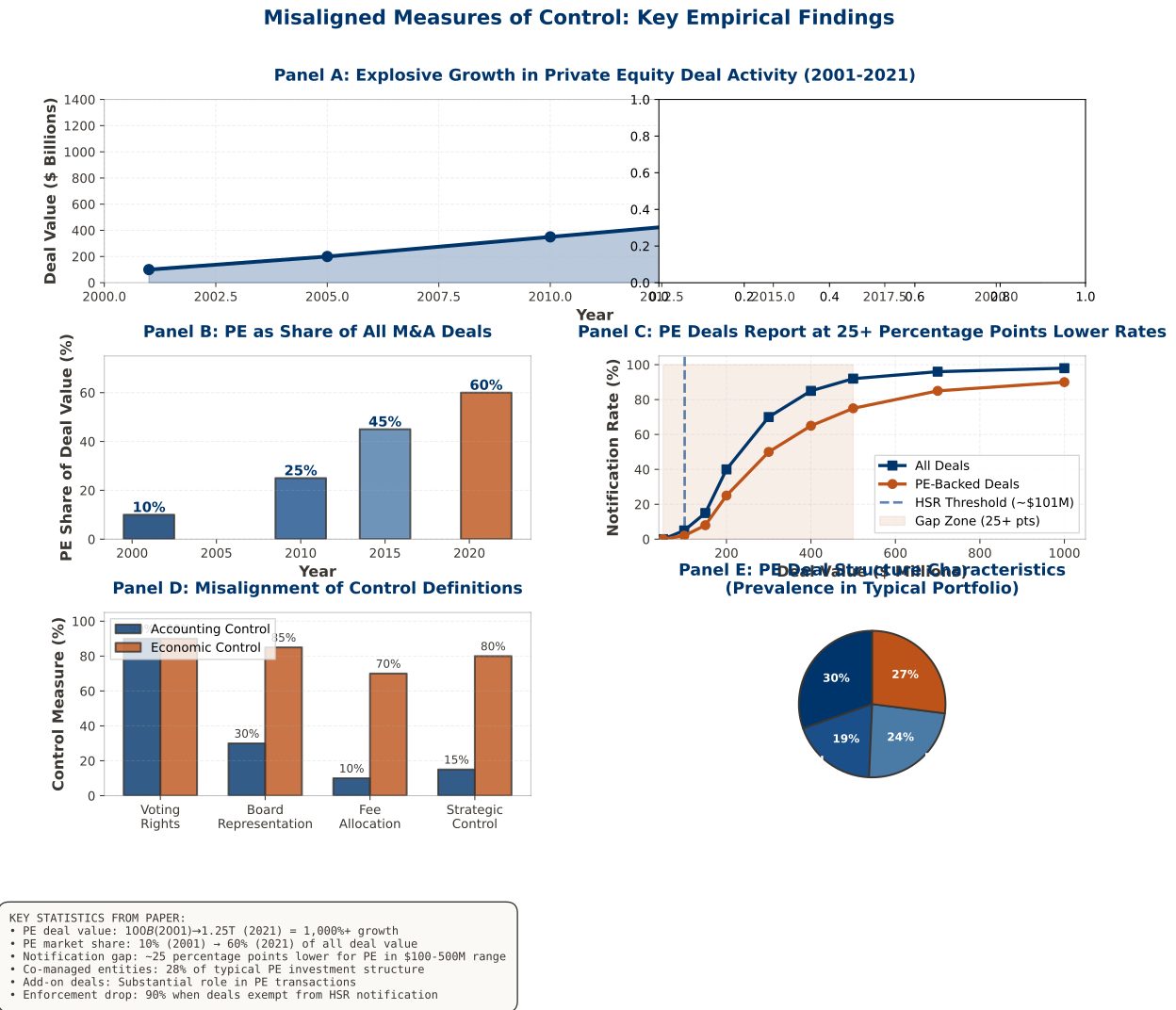
Our analysis combines transaction-level merger data with filing information to quantify the extent of PE-backed acquisitions that escape notification requirements. The figure below shows how premerger notification rates stay near zero below the Hart-Scott-Rodino reporting threshold and rise sharply above it, and how PE-backed deals are reported more than 25 percentage points less often than comparable transactions in the $100–500 million range—the systematic underreporting that follows from the misalignment between legal and economic definitions of control.
Regulatory Mechanism
The core issue identified in this paper is a fundamental misalignment between how the Hart-Scott-Rodino Act defines control (based on voting rights and legal ownership) and how control actually operates in private equity structures (based on management authority, board representation, and strategic decision-making rights). The figure below illustrates this divergence and shows how PE firms exploit this gap to evade antitrust scrutiny.
Research Contribution
This paper highlights a critical gap in antitrust enforcement frameworks. By documenting how PE firms exploit divergences between legal and economic control measures, we show that the HSR Act's ownership-based notification tests may systematically miss competitive harms in PE-backed portfolios.
Our findings suggest that antitrust authorities should expand their focus beyond formal ownership and transaction-size thresholds to account for actual economic control. This requires examining operational coordination, management alignment, and economic incentive structures—factors that ownership-based measures miss but that substantially affect competitive outcomes.