The LLC Framework
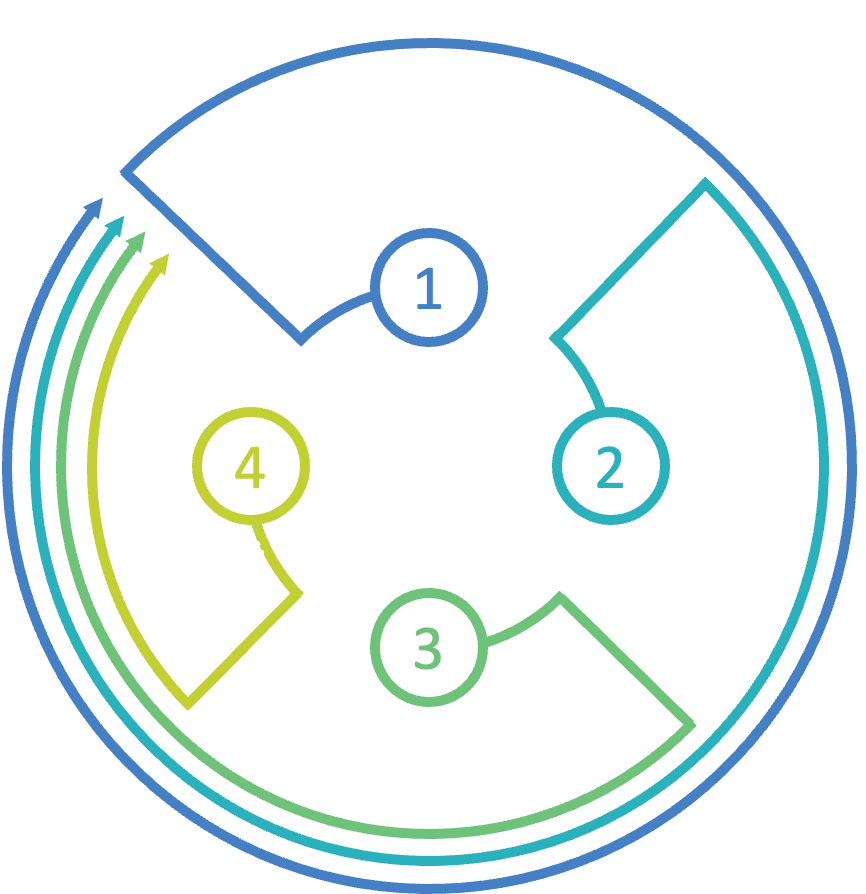
The Labor Life Cycle (LLC) framework organizes research at the intersection of corporate disclosure and labor economics into four stages of the employment relationship, pairing the labor theories in which information frictions are central with accounting evidence on how rank-and-file employees produce and use corporate information.
Know a paper we should cover? Point us to it
Accounting research has long studied executives and directors. This survey turns to the rank-and-file employees who both produce and use corporate information.
As producers of corporate information, the abilities, incentives, and job stability of rank-and-file workers are first-order determinants of reporting and audit quality. Better-educated labor pools, above-market pay for accounting staff, and more diverse audit offices are all associated with higher-quality reporting.
As users of corporate information, employees draw on disclosures in their search, bargaining, and departure decisions. Earnings announcements prompt job search, pay transparency reshapes wage-setting, and human capital disclosures change who applies. Disclosure models that assume a capital market audience alone miss the labor market channel entirely.
Disclosure affects employment, and employment affects disclosure. Turnover risk acts as a proprietary cost that shapes what firms report; reporting prompts belief revision that drives quits; and the resulting workforce changes alter the quality of future financial statements. Theory implies this loop, yet direct empirical evidence on it remains scarce, making it a central open question for accounting research.
We maintain a companion database of studies mapped to the LLC framework and are always looking for papers we may have missed. If you know of published or working papers at the intersection of accounting and labor that should be covered in this survey, we'd love to hear about them.
Suggest a Paper
The 150-hour CPA requirement dampens the supply of new accountants, disproportionately among candidates facing financial constraints, with no measurable improvement in quality. The pattern fits neither skill-building nor screening, and points instead to licensing as supply restriction.
Better-educated labor pools produce higher-quality financial reports. Firms investing in accounting skills among rank-and-file employees, including in non-accounting roles, are more likely to remediate internal control weaknesses. The entire workforce matters, not just accountants.
Audit offices with more newly hired foreign labor show higher audit quality, especially where resources are constrained. But evidence on visa programs and reporting quality is mixed, and new H-1B fees make the question more pressing.
Automation is likely to raise the returns to advisory and analytical skills while reducing demand for routine compliance tasks. Whether current curricula produce the competencies a more technology-intensive profession will value is an open question.
Incumbent employees search more during earnings announcement weeks, as announcements resolve uncertainty about their employer’s outlook. Good news can prompt search too, as workers learn about their own market value. Financial reports are labor market signals whether firms intend them to be or not.
Firms strategically adjust what they reveal to attract workers, and human capital disclosures change applicant composition. But the same transparency that recruits talent also helps competitors poach it, a tension that remains unresolved.
Whether transparency raises or lowers pay depends on who sets wages: it strengthens workers where wages are bargained and can anchor offers down where firms post them. H-1B wage disclosure reduced pay for high-skilled foreign workers, while CEO-to-worker pay ratio disclosure is associated with higher employee ratings.
Fear of retaliation suppresses negative employer reviews and biases review platforms. Anti-SLAPP laws that reduce that risk lead employees to reveal more adverse information, and firms experience fewer stock price crashes.
Paying accounting and audit staff above-market wages predicts better reporting and audit outcomes, and audit offices that underpay relative to other service lines show lower audit quality. Consistent with efficiency wages, higher pay attracts better workers and raises the cost of job loss.
Firms facing strong unions disclose less, especially good news, smooth reported earnings, and favor private debt, which lets them share information with lenders while keeping it from organized labor.
Audit partner diversity is associated with higher office-level audit quality, measured by fewer client restatements, and the relation runs partly through more diverse office personnel.
Rank-and-file workers observe misconduct that outsiders miss. Monetary incentives affect both the quantity and quality of whistleblower reports, while retaliation risk suppresses disclosure. Employee reporting is part of the governance system.
Reporting events move turnover through belief revision: pay ratio disclosure increased turnover, especially at firms with high CEO-to-worker ratios. Whether disclosure-induced separations are efficient is a central open question for accounting research.
Firms adjust disclosure to hold on to workers. Noncompete enforceability is negatively associated with disclosure, and firms add positive forward-looking disclosure after a large employer enters their market. When outside options are restricted, upward earnings management falls.
Revealed financial fraud predicts higher turnover, and the departures are largely firm-initiated: workers leaving fraud firms earn less than matched peers at firms with no fraud.
Pension recognition and disclosure rules change how firms invest pension assets, shifting risk in workers’ retirement wealth. The move from defined-benefit to defined-contribution plans removes much of the reporting outsiders relied on. With 75% of AICPA members eligible for retirement in 2020, the loss of institutional knowledge is a live question for reporting quality.
Know of a published or working paper at the intersection of accounting and labor that we should cover? Point us to it and we'll take a look.